
Rear-End Collisions
Home » Personal Injury » Car Accidents » Rear-End Collisions

Injured in a Rear-End Collision in Utah?
Keep Fault on the Driver Who Hit You
You stopped, or slowed down the way any careful driver would, when the car behind you did not stop in time. Utah Code § 41-6a-711 requires drivers to follow no more closely than is reasonable and prudent, with at least two seconds between vehicles. When the driver behind you ignores that rule, their insurer starts looking for a way to blame you. Caldwell Filler & Grayson builds the evidence that keeps fault where it belongs.
Why Hire a Rear-End Collision Attorney?
Insurers know most people assume a rear-end claim is simple, and they count on it. The adjuster calls early, sounds friendly, and offers a quick check for the bumper. That offer often arrives before you know how badly you are hurt, and accepting it can close your claim for good.
Then the blame starts. Adjusters look for any reason to shift fault onto you: a sudden stop, a broken brake light, a lane change seconds before impact. Every percentage point they shift reduces what you recover. We answer each argument with evidence, gathered before it disappears.
Utah reduces your recovery by your share of the fault, so every point the insurer moves matters.
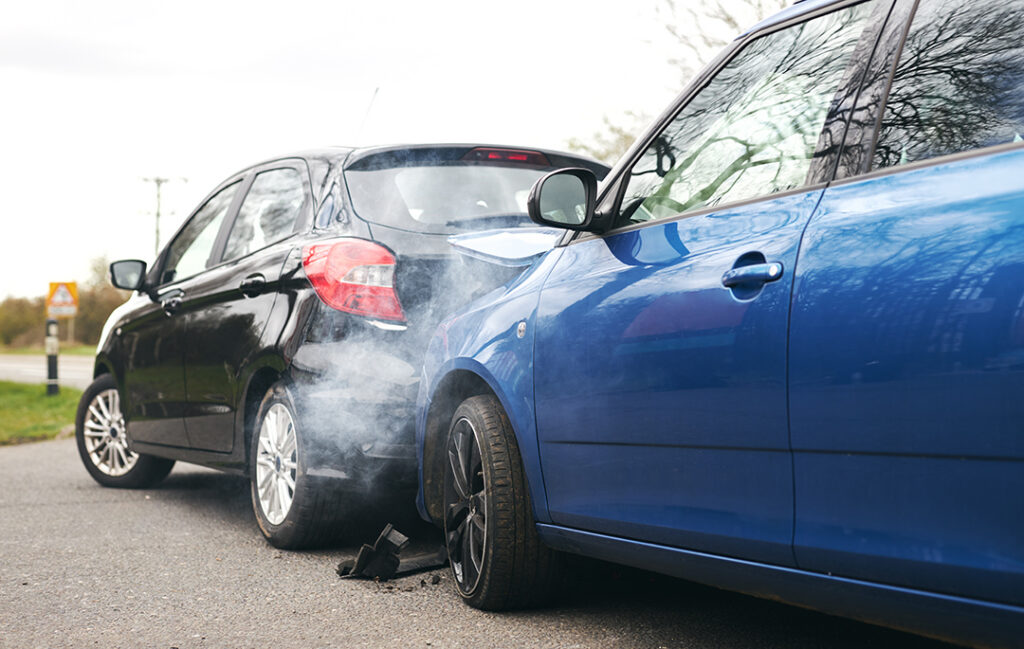
Rear-End Collision Attorneys
Rear-end claims are won or lost on details: where the damage sits on each vehicle, how much time the other driver had to react, and whether your treatment records tell one consistent story. We build the case around those details from the first week.

Cory brings broad litigation experience to every case, with a background spanning personal injury, family law, real estate, construction defect, and constitutional law.

How Much Does a Rear-End Collision Attorney Cost?
No attorney’s fee unless we win. Like all of our personal injury cases, rear-end collision claims are handled on contingency, so you only pay if compensation is received.
Rear-End Collisions We Handle
No two rear-end crashes leave the same evidence behind. We handle claims involving:
- A stop at a red light, a stop sign, or in backed-up traffic
- Slowing for a hazard, a turning car, or a pedestrian ahead
- Chain-reaction crashes involving three or more vehicles
- Freeway slowdowns and construction zones, where impacts come at full speed
- Parking lot and other low-speed crashes the insurer calls minor
- A following driver who was on a phone or impaired
- A semi or delivery truck that hit you from behind (see Truck Accidents)
- Passengers injured in either vehicle
What Compensation Can I Recover After a Rear-End Collision?
Rear-end crashes often do more damage than the bumper suggests. Your claim may include:
- Whiplash, herniated discs, and other neck and back injuries that worsen over days or weeks [link to whiplash page when live]
- Physical therapy, chiropractic care, or imaging that your insurer may resist covering
- Vehicle repair or total-loss costs beyond what property damage coverage pays
- Missed work during recovery and follow-up treatment
- Pain, limited mobility, and disruption to daily life
Utah’s no-fault PIP coverage pays your first medical bills, but rarely the real cost of a serious injury.
Protect Your Claim From Day One
See a doctor right away, even if you feel fine, and keep every follow-up appointment. Then let us build the case. We pull traffic camera footage where it exists, document vehicle damage patterns, obtain event data recorder information, and gather witness statements before memories fade.
Rear-Ended in a Car Accident in Utah?
When You’re Rear-Ended, Fault Matters.
Let us build the evidence so you can focus on recovery. Schedule a free, confidential consultation today. No attorney fees unless we win.
Call Us:
Tooele: (435) 830-7577
Email Us:
Info@CFG.Law"*" indicates required fields
Frequently Asked Questions
Is the driver who hit me from behind automatically at fault?
Not automatically. The following driver is usually found at fault, but the insurer will look for anything that moves part of the blame to you. Evidence from the scene and the vehicles is what keeps it from sticking.
What if I was stopped at a red light or in traffic?
Being fully stopped strengthens your claim, but insurers may still dispute how badly you were hurt or blame a prior condition. Photos from the scene, the police report, and consistent medical records answer those arguments.
What if my pain did not start until days after the crash?
That is common, especially with neck and back injuries. See a doctor as soon as symptoms appear and tell them about the crash, because a gap in treatment is one of the first things an adjuster will use against you.
What if the insurer says the damage was too minor to cause an injury?
Light vehicle damage does not prove you were not hurt, and adjusters know it. Prompt treatment and consistent medical records are what answer that argument.
What if more than two cars were involved?
In a chain-reaction crash, more than one driver may share fault, and each insurer will point at the others. Utah divides fault among everyone involved, and each driver pays only their own share, so identifying every responsible driver matters.